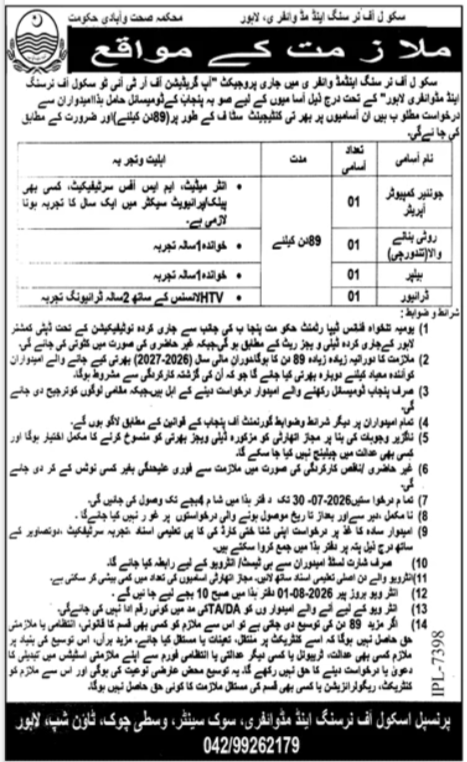
- Salary Offer 78000-90000 USD 78000-90000 Month
- Address Lahore, Punjab, Pakistan
- Age limit 20-30
- Gender Both
- Job Sector Government
- Apply Through By Hand
- Job Authority
- Number of Post Multiples
- Education Bachelor | Master
- TA/DA No
- Domicile Punjab,Sindh,Balochistan,kpk
- Newspapper Jang Jobs
- Experience Required Fresh Can Apply
- Official Website https://e.jang.com.pk/lahore/19-07-2026/page22
| Posted On | |
|---|---|
| Company: | |
| Location: | |
| Job Type: | |
| Last Date: |
Jobs Positions
The School of Nursing and Midwifery continues to play a vital role in preparing healthcare professionals who provide quality patient care and improve public health. In 2026, nursing and midwifery education has become more advanced, focusing on modern healthcare technologies, evidence-based practice, and patient-centered care. Many institutions around the world, including those in Pakistan, have updated their curricula to meet international healthcare standards while addressing local community needs. Regulatory bodies such as the Pakistan Nursing & Midwifery Council (PNMC) continue to oversee educational standards, accreditation, and professional licensing.
P
PNMC
+1
One of the biggest developments in 2026 is the increased emphasis on digital learning and simulation-based education. Nursing students now use virtual laboratories, simulation mannequins, and online clinical case studies to enhance their practical skills before entering hospitals. These innovative teaching methods help students gain confidence, improve clinical decision-making, and reduce medical errors during real patient care. Many schools also integrate electronic health records and telehealth training into their programs, preparing graduates for the digital transformation of healthcare.
The curriculum offered by Schools of Nursing and Midwifery has also expanded to include specialized subjects such as critical care nursing, mental health nursing, maternal and newborn care, emergency nursing, community health, geriatric nursing, and healthcare leadership. Midwifery students receive advanced education in antenatal care, labor and delivery, postnatal care, neonatal health, and women’s reproductive health. This comprehensive approach ensures graduates can provide safe, ethical, and evidence-based healthcare services.
Clinical training remains one of the most important components of nursing education. Students complete supervised clinical placements in teaching hospitals, community health centers, maternity units, and specialized healthcare facilities. During these placements, they learn essential skills such as patient assessment, medication administration, infection prevention, wound care, communication, and teamwork. Practical experience enables students to apply classroom knowledge in real healthcare settings and prepares them for professional responsibilities after graduation.
Research and innovation have become key priorities for Schools of Nursing and Midwifery in 2026. Students are encouraged to participate in research projects focusing on patient safety, disease prevention, maternal health, infection control, and healthcare quality improvement. Faculty members guide students in conducting evidence-based studies that contribute to improving healthcare practices and policies. Research skills also help graduates become lifelong learners who can adapt to changing healthcare challenges.
Another important trend is the growing focus on leadership and professional development. Nursing schools now offer courses in healthcare management, ethics, communication, quality improvement, and policy development. These subjects prepare future nurses and midwives to become clinical leaders, educators, researchers, and healthcare administrators. Leadership training enables graduates to make informed decisions, advocate for patients, and contribute to the development of healthcare systems.
International collaboration has also increased significantly. Many Schools of Nursing and Midwifery have established partnerships with universities, hospitals, and healthcare organizations across different countries. These collaborations provide opportunities for student exchange programs, joint research projects, faculty development, and exposure to global healthcare practices. Such partnerships improve the quality of education and help graduates compete successfully in the international healthcare workforce.
A
Aga Khan University
Admission requirements for nursing and midwifery programs remain competitive in 2026. Applicants generally need strong academic performance in science subjects, particularly biology, chemistry, and physics, along with meeting the admission criteria established by educational institutions and regulatory authorities. Many institutions also evaluate communication skills, professionalism, and commitment to serving communities as part of their selection process. Admission schedules and eligibility requirements may vary by institution and province.
P
PNMC
+1
Career opportunities for graduates continue to expand both nationally and internationally. Qualified nurses and midwives can work in hospitals, community health centers, educational institutions, rehabilitation facilities, research organizations, military healthcare services, non-governmental organizations, and international health agencies. Some graduates pursue advanced education in specialized nursing fields, public health, or healthcare administration to further enhance their professional careers.
In conclusion, the School of Nursing and Midwifery in 2026 represents a modern, innovative, and highly respected educational pathway for students interested in healthcare. Through advanced technology, comprehensive clinical training, research opportunities, leadership development, and international collaboration, nursing and midwifery education continues to prepare competent professionals capable of addressing the evolving healthcare needs of society. As global demand for skilled nurses and midwives continues to grow, graduates of these programs remain essential contributors to improving healthcare quality, promoting community well-being, and ensuring better health outcomes for future generations.
P
A
Sources