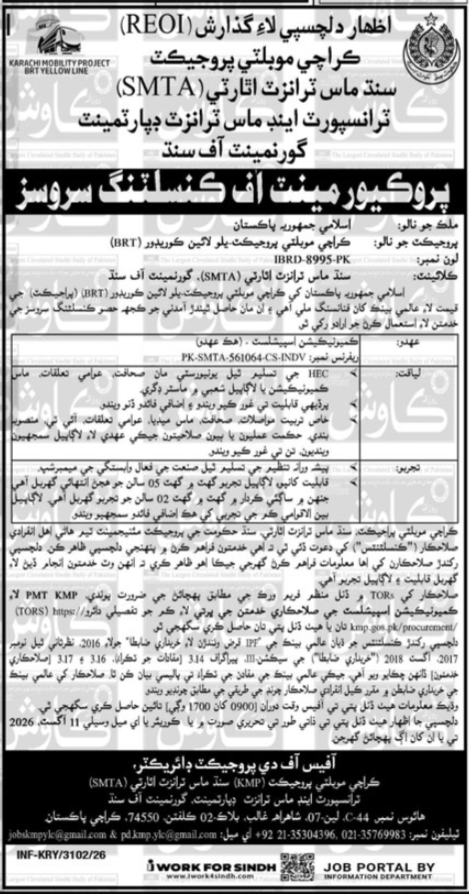
- Salary Offer 75000-85000 USD 75000-85000 Month
- Address Karachi, Sindh, Pakistan
- Age limit 20-30
- Gender Both
- Job Sector Government
- Apply Through By Hand
- Job Authority
- Number of Post Multiples
- Education Master
- TA/DA No
- Domicile Punjab,Sindh,Balochistan,kpk
- Newspapper Kawish Jobs
- Experience Required Fresh Can Apply
- Official Website https://www.thekawish.com/beta/index.php?date=2026-07-24&pageno=6
| Posted On | |
|---|---|
| Company: | |
| Location: | |
| Job Type: | |
| Last Date: |
Jobs Positions
The Sindh Mass Transit Authority (SMTA) is a key government organization established to improve public transportation systems across Sindh, particularly in major urban areas such as Karachi. In 2026, SMTA continues its mission of developing modern, affordable, safe, and environmentally friendly mass transit solutions to address growing transportation challenges. With increasing urbanization, population growth, and rising demand for efficient mobility, the authority plays an important role in transforming public transport infrastructure and improving daily travel experiences for millions of citizens.
The primary objective of SMTA is to plan, coordinate, regulate, and support large-scale public transportation projects throughout Sindh. The authority works under the Government of Sindh to develop integrated transport networks that reduce traffic congestion, improve connectivity, and provide reliable travel options for students, workers, businesses, and families. By introducing modern transit systems, SMTA aims to create a more organized and efficient transportation environment in urban and rural areas.
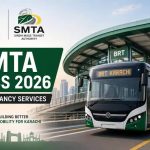
One of the major achievements associated with Sindh’s mass transit development is the expansion of Bus Rapid Transit (BRT) systems. These projects are designed to provide high-capacity transportation services through dedicated routes, modern buses, improved stations, and efficient ticketing systems. In 2026, SMTA continues supporting the development and management of advanced transit solutions that connect residential areas with commercial centers, educational institutions, industrial zones, and important public facilities.
Karachi remains a major focus of SMTA’s transportation planning due to its large population and complex mobility needs. The city faces challenges including traffic congestion, long commuting times, and increasing demand for affordable transport. Through coordinated planning, SMTA aims to improve public transport availability and create better links between different parts of Karachi. Improved connectivity helps citizens save travel time while supporting economic activities throughout the metropolitan region.
A major priority of SMTA in 2026 is promoting sustainable and environmentally responsible transportation. The authority encourages the use of modern buses with lower emissions and supports initiatives that reduce dependence on private vehicles. Efficient public transport systems can help decrease air pollution, fuel consumption, and road congestion. By promoting cleaner mobility solutions, SMTA contributes to environmental protection and supports global efforts toward sustainable urban development.
Technology integration is another important feature of modern mass transit management. SMTA focuses on digital solutions such as electronic ticketing systems, passenger information services, route monitoring, and operational management technologies. These systems improve efficiency, increase transparency, and provide passengers with better access to travel information. Digital tools also help transport authorities analyze passenger demand and improve services according to public needs.
Passenger safety and comfort remain central priorities of SMTA’s transportation strategy. Modern transit projects include improved bus stations, security measures, accessibility features, and passenger facilities designed to create a convenient travel experience. Special attention is given to women, senior citizens, and persons with disabilities by promoting inclusive transportation systems that allow all members of society to travel safely and independently.
SMTA also supports economic development by improving workforce mobility. Reliable public transportation enables employees to reach workplaces more easily, helps students access educational institutions, and allows businesses to operate more efficiently. Better transport networks contribute to productivity, job opportunities, and overall economic growth. The authority’s projects create employment opportunities in areas such as transportation management, engineering, operations, maintenance, and administration.
The development of mass transit systems requires cooperation among multiple stakeholders, including provincial government departments, local administrations, transport operators, engineers, urban planners, and international development partners. SMTA works with these stakeholders to ensure effective project planning, financial management, technical implementation, and long-term sustainability. Coordination between different institutions helps overcome challenges and ensures that transportation projects meet public expectations.
In 2026, SMTA continues focusing on integrated transportation planning. Rather than developing isolated routes, the authority promotes interconnected transport networks where different modes of travel can work together. Integration between buses, railway services, feeder routes, and other transportation options improves accessibility and provides passengers with more convenient travel choices. This approach supports the development of a modern urban mobility system for Sindh.
The authority also emphasizes improved transport governance and professional management. Effective monitoring, regulation of transport operations, and adoption of international best practices help maintain service quality. Continuous evaluation allows SMTA to identify operational issues, improve efficiency, and provide better transportation solutions for the public.
Public awareness and community involvement are also important aspects of successful mass transit projects. Citizens need information about routes, schedules, ticketing procedures, and benefits of using public transport. Awareness campaigns encourage people to choose public transportation, helping reduce road pressure and supporting sustainable mobility goals.
In conclusion, the Sindh Mass Transit Authority (SMTA) Latest 2026 represents a significant effort toward creating a modern, efficient, and sustainable transportation system in Sindh. Through mass transit development, digital innovation, environmental responsibility, passenger-focused services, and strategic planning, SMTA is helping transform urban mobility. As transportation demands continue to grow, the authority remains committed to providing better connectivity, reducing congestion, and improving the quality of life for people across Sindh.